BNG for Bury Council's Pyramid Park upgrade
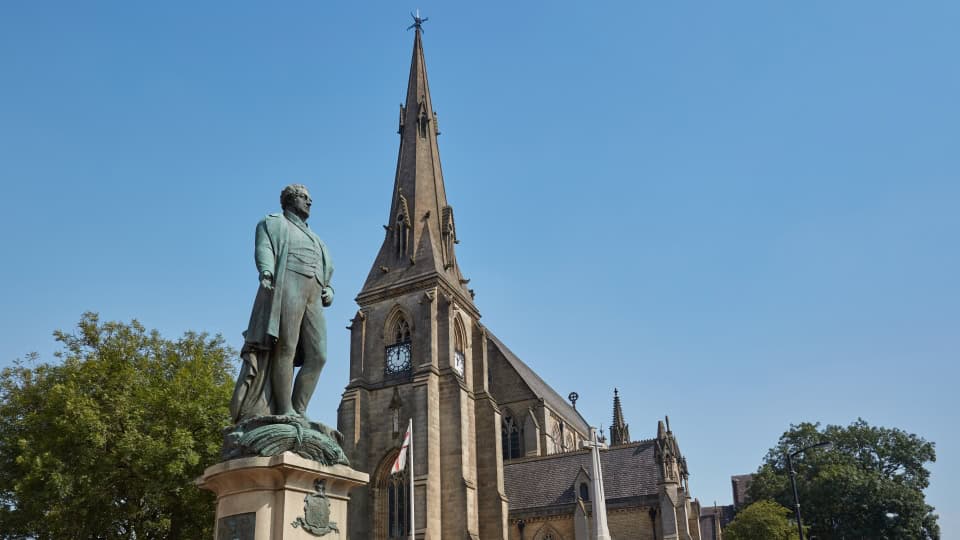
In the first phase of an extensive plan to regenerate their town centre and unlock a disused brownfield site for new housing, Bury Council purchased off-site Biodiversity Units from Environment Bank to help meet Biodiversity Net Gain (BNG) requirements at Pyramid Park.
About the development project
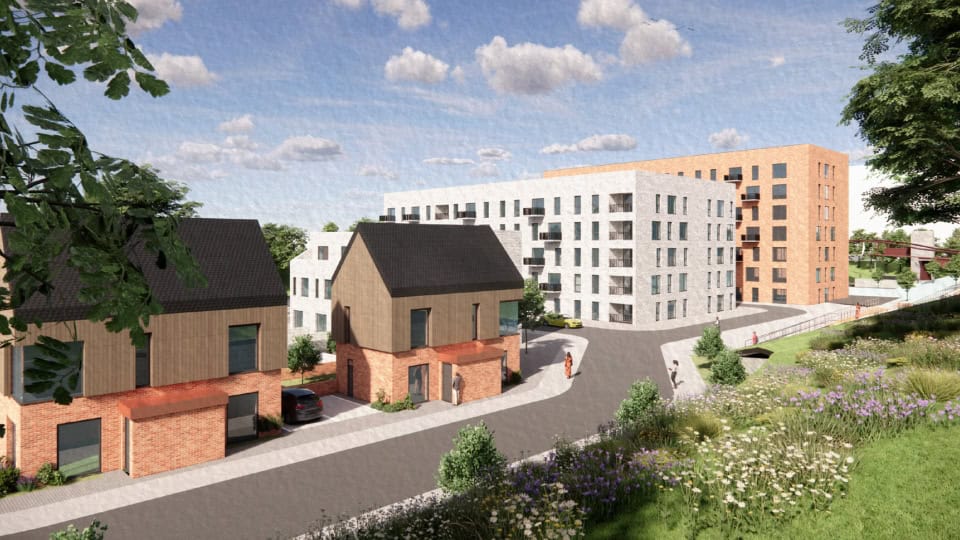
In the town of Bury, Greater Manchester, the council sought to take a disused 7.4-acre brownfield site, once home to the Knowsley Street railway station and sidings and transform it into a new sustainable and intergenerational residential neighbourhood.
The first phase of the scheme, located at Pyramid Park off Market Street in Bury town centre, involves the construction of a new access road and the remediation of the site which will unlock it for comprehensive residential development in the future. The infrastructure and remediation works at Pyramid Park have been enabled through £1.73 million of funding from the Government’s Brownfield Land Release Fund (BLRF2).
The development of Pyramid Park is a key element to the regeneration of Bury and forms an important part of the town centre masterplan which will see the delivery of hundreds of new high-quality homes in Bury town centre.
Pyramid Park benefits from being situated in a highly sustainable town centre location, offering immediate access to a variety of local amenities. The site will benefit from enhanced access to the adjacent interchange, by a new pedestrian link bridge, provided as part of the multi-million-pound redevelopment of Bury Interchange by Transport for Greater Manchester (TfGM).
It would not have been possible to deliver the required BNG uplift entirely on-site without significantly compromising the developable space and viability of the future residential scheme – however Environment Bank was on hand to supply off-site Biodiversity Units to ensure the council’s planning condition and requirements could be satisfied.
An effective off-site BNG solution for the council
The council contacted Environment Bank in November 2024, well ahead of their on-site start date, to get a quote for off-site Biodiversity Units in four habitat types – including a fractional requirement of less than a whole Biodiversity Unit in three of them – to help satisfy their BNG planning condition.
After reviewing their metric, Environment Bank quickly sourced and supplied the precise number of Biodiversity Units required, offering a fractional purchase so that the council wouldn’t need to pay for more than necessary and providing continued support throughout the planning phase.
Bury Council made their final payment with us at the start of April 2025, just over four months after their initial enquiry. The Biodiversity Units purchased were formally allocated onto the biodiversity gain sites register within a few weeks of payment, allowing work to begin on-site as planned in June 2025.
Thanks to Environment Bank, we were able to satisfy the planning requirements for this critical town centre regeneration scheme, and the remediation and infrastructure works can go ahead on time. The team supported our needs excellently – from our first enquiry to the allocation of our Biodiversity Units onto the biodiversity gain sites register.
Environment Bank worked closely with us throughout the planning process and were always on hand to answer any questions or offer suggestions, and we’re delighted the habitats being restored are so close to our development. We would highly recommend Environment Bank to other councils across Greater Manchester and beyond.
James Broadhurst
Housing Development Officer
Bury Metropolitan Borough Council
Large-scale habitat creation in Greater Manchester
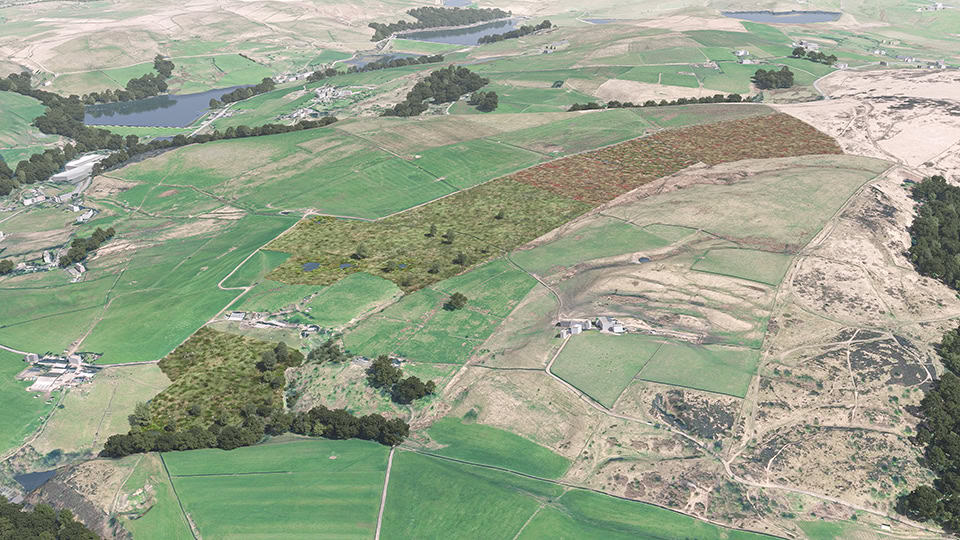
We sourced the Biodiversity Units required for Bury Council’s project from our Newhey Habitat Bank situated only ten miles from the development site and located within the neighbouring Greater Manchester local planning authority (LPA) area which helped keep costs down for the council.
Although Biodiversity Units were unavailable within the borough of Bury itself, the close proximity of the off-site enhancements at the Newhey Habitat Bank to the Pyramid Park site has contributed towards a larger, better-connected nature recovery project only a short distance away.
The 60-acre Newhey Habitat Bank has been designed by our team of ecologists to generate a range of different Biodiversity Unit types – including mixed scrub, lowland meadows, neutral grassland, and fens – which made it ideal for satisfying the council’s specific requirements.
A public footpath crosses Newhey Habitat Bank which means that local people who walk there will be able to enjoy watching the space continue to thrive over the coming decades. We hope to see a variety of native wildlife species – including otters, owls, falcons, and more – grow in abundance because of the new habitats.
We’d like to thank Bury Metropolitan Borough Council and the teams working on this project for allowing us to help support the redevelopment of Bury town centre. It’s a pleasure to play a role in the growth and of our towns and cities by providing Biodiversity Units from Habitat Banks in our BNG network near to the development.
Lloyd Collins
Strategic Account Director
Environment Bank