What Biodiversity Net Gain got right – and what comes next
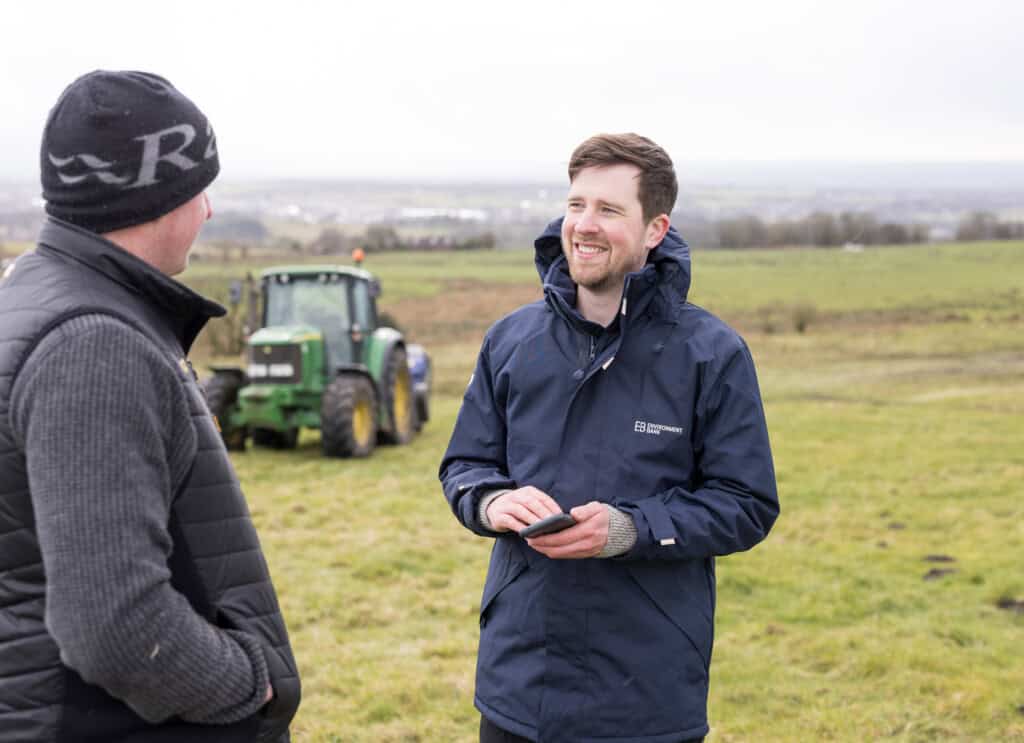
Ahead of our panel with NatureMetrics at the COP17 conference, Rob Wreglesworth discusses the role BNG has evolved and what tomorrow looks like.
Recently, I’ve attended a number of roundtables and working groups looking at how the principles of Biodiversity Net Gain (BNG) might be applied beyond England.
It’s been a valuable moment of reflection – an opportunity to appreciate how far we’ve come, what the policy has changed and enabled, as well as what the policy does well and what still needs work.
The tension with biodiversity markets is that, unlike carbon, a single global unit of biodiversity simply isn’t possible – or at least not in the same way. That being said, a common unit of measurement isn’t about commoditising nature.
It creates a common language. It lets us contract. Without it, we couldn’t scale or bring in the institutional capital that has allowed Environment Bank to build more than fifty Habitat Banks and begin restoring almost two thousand hectares of England’s degraded landscapes.

What BNG has enabled
It’s easy to forget what the system looked like before. Biodiversity had no number in the planning system, so it lost almost every trade-off – against flood risk, viability, and contaminated land. That has now changed.
- Scale: capital follows certainty. A clear rule and a common unit gave investors something they could underwrite and habitat creation moved from one-off projects to a pipeline.
- A whole sector upskilled: developers, planners, landowners, and lenders now talk about habitat condition and distinctiveness as a matter of course. This would have been unthinkable five years ago. Ecology has gone from a specialist niche to now a mainstream and valued skill in the industry.
- Impacts avoided, not just offset: because losses now carry a cost, there’s a real incentive to avoid them at the design stage. Ecologists are brought in earlier, sites are laid out differently, and the mitigation hierarchy has a meaningful impact. This is unfortunately hard to track but, based on the consistently low number of statutory credit sales still, it seems we can see that the policy is working.
- Ecology forward in planning: nature is now part of the conversation at the start of a scheme, not just a box ticked at the end.
- A wider economy: BNG didn’t just stop at Habitat Banks. A whole ecosystem has grown around the policy – consultancies, startups, monitoring tech, nature services – along with providing new long-term income for farmers and landowners.
Why BNG works
When stripped back, the success of BNG comes down to four crucial elements
- A rule creates demand: developers have to deliver gain. That certainty is what lets Environment Bank and others secure land and create habitats before buyers arrive, bringing down that gap between impact and delivery.
- A common unit creates a market: everyone measures the same way, so nature can be priced, compared, and contracted. It isn’t perfect science but it’s consistent and measurable – and that’s what matters for a market to function.
- Long-term commitment matches how nature works: thirty years isn’t arbitrary. Habitats take time to establish and short funding cycles are why so much nature recovery quietly fails.
- Risk sits with whoever’s best placed to carry it: the buyer gets certainty from day one. The provider carries all delivery obligations, which are monitored and enforceable. That’s what lets capital come in early – and it’s why BNG has scaled where outcome-only models have stayed small and grant-dependent.
This is just the start
None of this means the job’s done. If anything, getting the basics right has shown us where the next gains are.
- From prediction to proof: the metric is a starting point, not the finish line. It predicts what a habitat should become, rather than reporting on final results. A broad habitat metric is fine for getting nature into the conversation, but to be certain of outcomes we need more data layered on top – species, condition, function – measured over time.
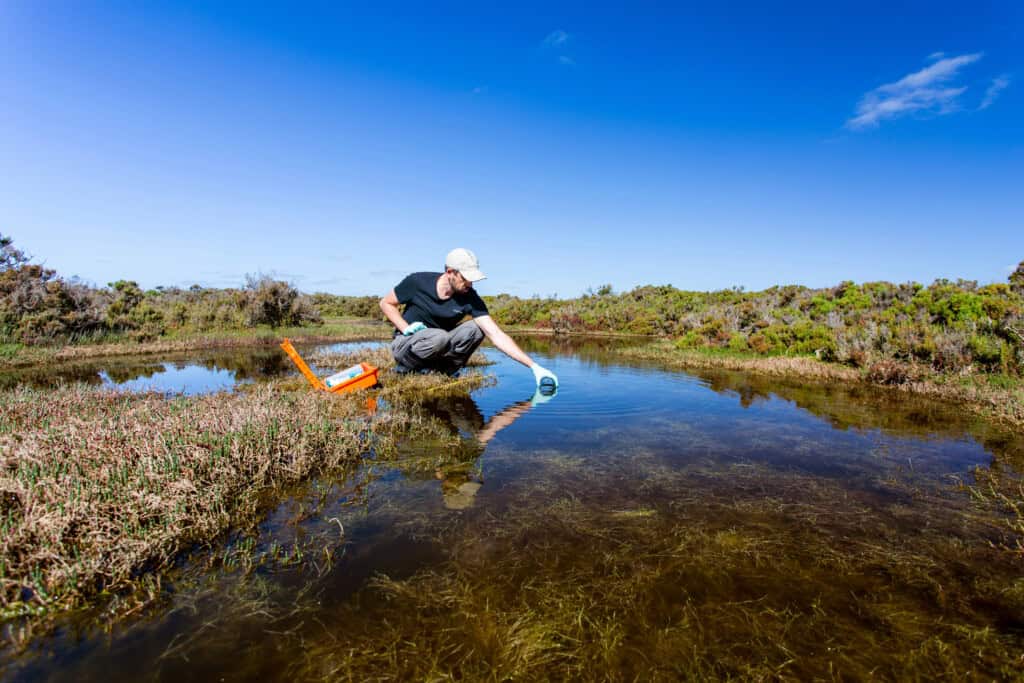
- Monitoring that’s affordable at scale: proving delivery across hundreds of sites for thirty years has to be done cost-effectively, or it won’t get done properly. This is where technology like eDNA, remote sensing, and modelling comes in.
- Capacity to check and enforce: a market is only as credible as its oversight. Planning authorities need the skills and resources to hold everyone to what they’ve committed to, as well as the tools to help them do this more efficiently.
- Thinking beyond the site: the biggest gains come when Habitat Banks connect into wider landscapes and deliver more than biodiversity – such as water security, flood resilience, carbon storage, and public access.
- Adapting, not copying: as other countries look at BNG, the lesson isn’t to export the English metric wholesale. It’s to export the principles – a rule, a common unit, long-term commitment policies, and clear responsibility for delivery – and build a unit that works for their own natural and economic landscapes.
At Environment Bank, we’re already looking at a broader scope. Building on our success with BNG, we have expanded into a suite of Nature-based Solutions that offer the opportunity to invest in nature through four pillars:
- BNG: Ready-made Biodiversity Units, forward purchase agreements, or a bespoke Habitat Bank built where it’s needed.
- Environmental consenting and compensation: Consent and de-risked delivery for complex sites, from species mitigation to Habitat Regulations Assessment (HRA) compensation, with the long-term liability taken on.
- Nature-based resilience: Nature-based projects that protect assets from flood, drought, heat, and declining soil health.
- Corporate nature partnerships: A long-term delivery partner for nature strategies, including Nature Shares and bespoke programmes.
This joined up approach enables the kind of adaptability and long-term goal setting that we need in order to take the next step.

A conversation for COP17
This is the conversation I’m taking to Yerevan. On 21st October I’ll be joining NatureMetrics and Accounting for Nature to talk about exactly this: how a common unit gets nature into the market and how better measurement ensures real nature gains.
Our Chief Nature Officer, Emma Toovey, will be speaking at another panel on Tuesday 27th October to discuss how investment can be scaled to meet the demands of the Kunming-Montreal Global Biodiversity Framework. This framework lays out a series of objectives designed to halt and reverse biodiversity loss by 2030. The kind of integrated, open-minded investing strategies outlined above are exactly what is needed to achieve this.
We’re attending several other events at this time, to share our experiences with BNG in England and speak to companies and governments from across the globe who are looking at similar policies to help them meet the GBF’s obligations.
While the COP17 discussions is focusing heavily on the gap between global nature commitments and delivery. BNG is a leading example of what’s possible when policy, measurement, and capital line up.
If you’re at COP17, come and find us to learn more about the future of the nature sector.