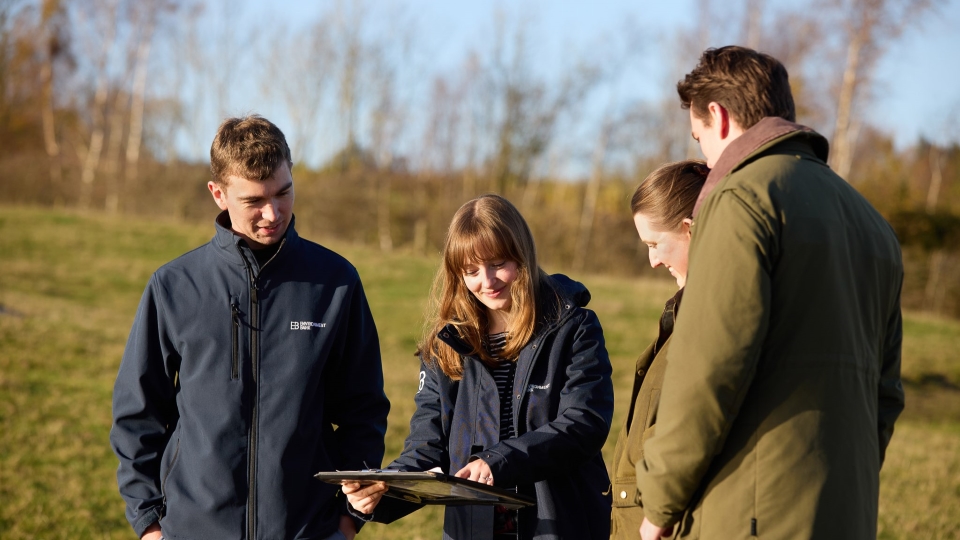
Environment Bank’s TNFD Report 2026
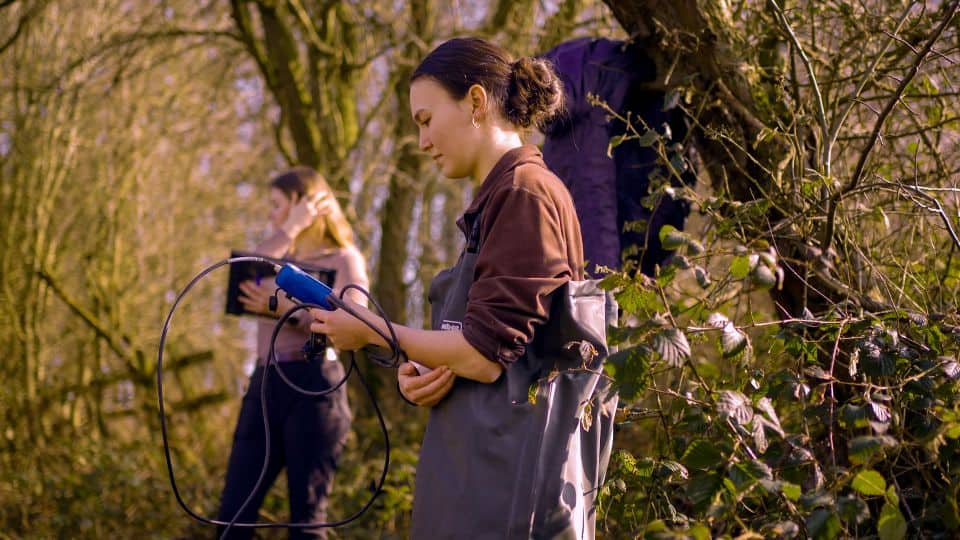
Last year we published our first TNFD report, throughout which we acknowledged that, even as a business centred around nature restoration, we should all be working to address our impacts and dependencies on nature.
We have now completed our 2026 Nature Disclosure Statement, covering April 2025 to April 2026 – and we’re still committed to transparency and accountability around our business practices.
This year, we returned to our 2025 report to refine our commitments and assess our progress against a clear starting point. Throughout this blog, we’ll discuss how we have begun to deliver – and what we have learned about our journey ahead.
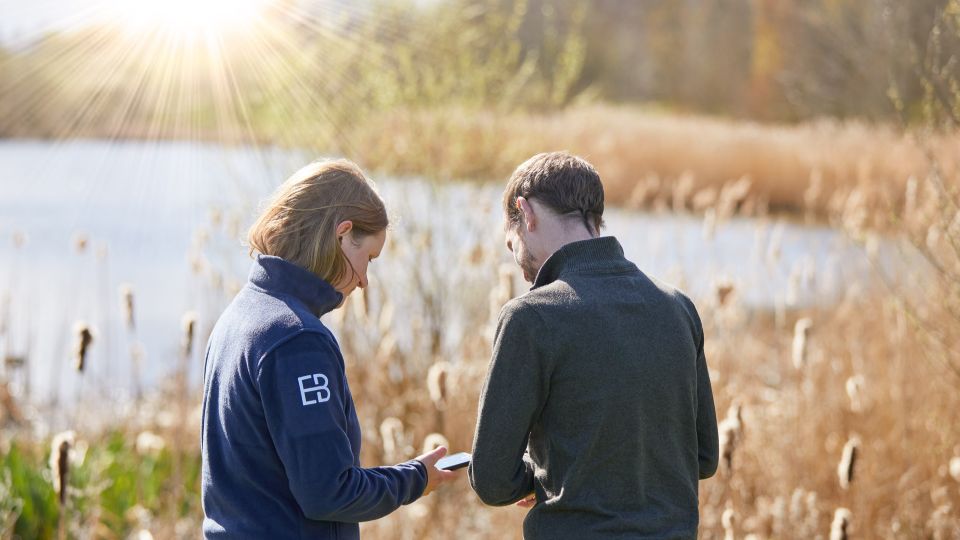
One year on: how we have built on last year’s report
In 2025, we used TNFD’s LEAP approach (Locate, Evaluate, Assess, Prepare) and ENCORE, a tool which allows businesses to identify material nature risks and dependencies, to form the basis of our first TNFD report. This enabled us to map out and effectively target our business’ pain points and areas of improvement.
In 2026, we didn’t repeat the full assessment. Instead, we reviewed our progress from the past year against our previous commitments and tracked ten key impacts and dependencies, each categorised with a simple status: Defined, Partial, or Not yet. As well as defining our current position, we also determined how each has changed since last year to ensure that we know what’s working and what still needs improvement.
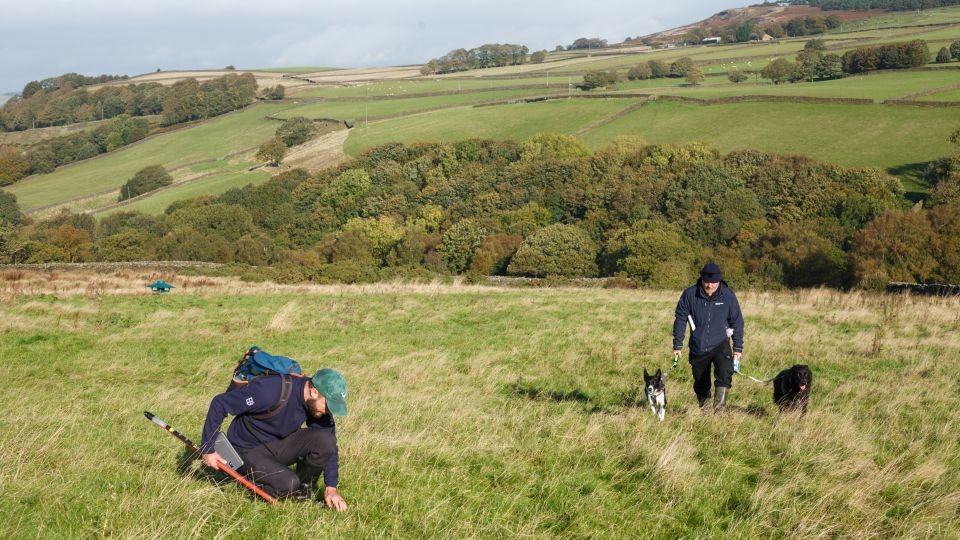
Where are we in 2026?
As we created our 2026 report, it became clear that we have made definitive progress since 2025. Most of our impacts and dependencies were recorded as ‘Partial’ – meaning we have developed a method, or have a clear starting point, but we have not yet achieved consistent measurement across our portfolio of nature restoration sites.
This can be seen through our assessment of greenhouse gas (GHG) emissions – where we have begun to estimate carbon sequestration with our Natural Capital Calculator, but this has yet to form a complete picture across our business.
Our greatest dependency from 2025, local climate regulation, is also being steadily addressed. Our internal Habitat Bank viewer now includes UK Climate Projection (UKCP18)-based layers and has been enabling our ecology team to design habitats which will accommodate for the long-term conditions that each site is likely to face. We are also advancing research in this field with a partnership that has installed microclimate sensors on six monitoring plots which have already begun collecting data across our network.
We now hold a dedicated TNFD risk register and have been regularly involved in shaping regulatory standards through BSI Flex 701 and the International Advisory Panel on Biodiversity Credits (IAPB). These are all useful foundations for the future of our business and the wider biodiversity sector – representing the necessary groundwork for future nature action and change.
It is also important to note Environment Bank’s growth as the leading Biodiversity Net Gain (BNG) and Nature-based Solutions provider. Our portfolio has now evolved to include fifty-one sites where we have already restored over four thousand acres of land – including over thirty kilometres of hedgerow and eleven kilometres of watercourses.
Social value: how we’re helping people and communities
Our work doesn’t only affect nature, but also local people and communities. Dedicated nature recovery has a wide range of social benefits – such as creating opportunities to access green spaces, promoting education around the environment, and supporting rural economies. Maximising these benefits is not simply an afterthought for Environment Bank – it is one of our key principles and commitments.
Between April 2025 and March 2026, we hosted eighteen events dedicated to enhancing social value – seven of which were centred around school and youth engagement. One of the highlights was our partnership with Bristol-based charity Black2Nature, through which we brought a group of twenty Visible Minority Ethnic young people to our Honiton Habitat Bank.
Throughout the day, we hosted several hands-on activities at our site – including a plant identification trail, pond dipping, and nature photography – and finished with a group discussion where the children were encouraged to share what they learned and ask our ecologists questions about nature. Through our annual charity hike, where our team completed the thirty-kilometre High Fells challenge, we were also able to fundraise over £2,600 for Black2Nature.
In 2026, we also co-hosted the Nature Education Conference with Mount Kelly school for over two hundred delegates; ran our first Women for Biodiversity event; began supporting a Value of Information for Nature PhD at Lancaster University; and have ran five internal site visits to enable our wider team to see the value of our sites first-hand.
Although we don’t yet track our social value work as consistently as our ecological metrics – we are dedicated to improving and maintaining our outreach with local people and communities as part of our nature positivity journey.

Maintaining transparency throughout our 2026 TNFD report
A key part of creating and upholding a credible TNFD report is a commitment to accountability. This is why we’re maintaining honesty around the gaps in our progress this year.
In 2026, we haven’t carried out measurement on several of our nature-related risks and dependencies. This is because some of these are harder to measure than they look – and we’re committed to developing a real solution, rather than implementing a quick fix.
Soil and sediment retention is an example of this: it is a key consideration across all the habitats we create, but we don’t yet have a robust method of measuring this across all of our sites. Solid waste is another area where we are yet to establish a metric. Instead of looking for an easy answer, or accepting these risks, we have acknowledged these areas and are setting defined targets. This is the point of the TNFD report. It not only shows us where our monitoring is strong – but it also highlights the gaps in our practices and holds us to account year on year.

Our 2026 report: what have we learned?
Last year we stated that the best way to start TNFD report is just that – to start. This year we have learned that the second report is not about having completed your nature positivity journey or ticked every box. It’s about seeing whether your commitments actually turned into action, setting measurable targets, and ensuring accountability for each risk and dependency you have identified.
With new monitoring partnerships already underway, we expect our 2027 TNFD report to build on what we have learned this year. We’re hoping to fill more of our gaps, create new methodologies, and ultimately keep progressing towards our targets.
Finally, we’d like to thank the Green Finance Institute for their work to promote accountability around nature-related risks and dependencies. Their online TNFD roundtable certainly helped us, and other businesses, to shape our thinking and work towards our targets.