Puddington Habitat Bank wins the CIEEM Best Practice award
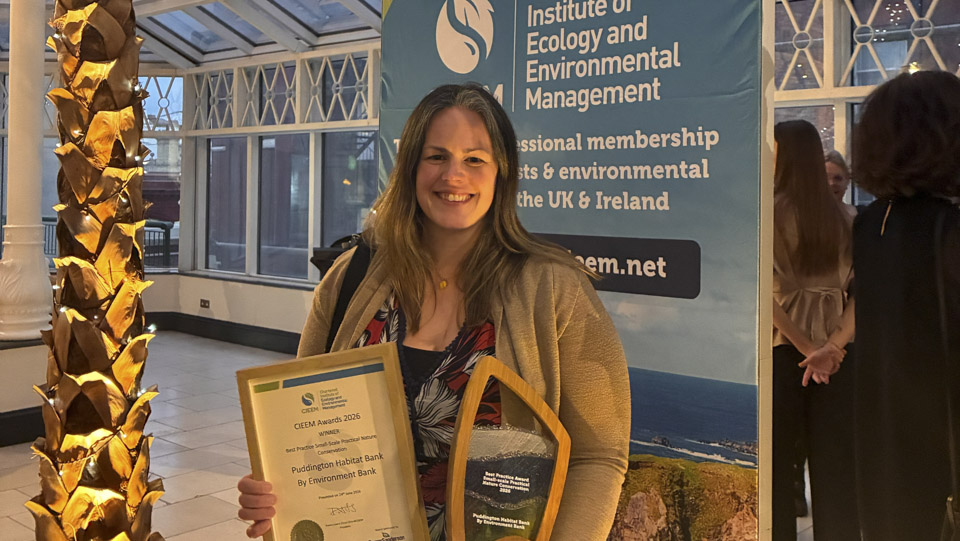
We’re proud to announce that Environment Bank has won the Chartered Institute of Ecology and Environmental Management (CIEEM) Best Practice Award for Small-scale Practical Nature Conservation, for our Puddington Habitat Bank.
CIEEM is the leading body for supporting ecologists and environmental managers in the UK and Ireland. Since 2006, they have presented awards annually for outstanding ecological work that supports their mission of championing nature and sustainability.
In 2026, CIEEM presented their Best Practice Small-Scale Practical Nature Conservation Award to Environment Bank for our Puddington Habitat Bank, in recognition of the integrity of our nature restoration.
Why did Puddington Habitat Bank win this award?
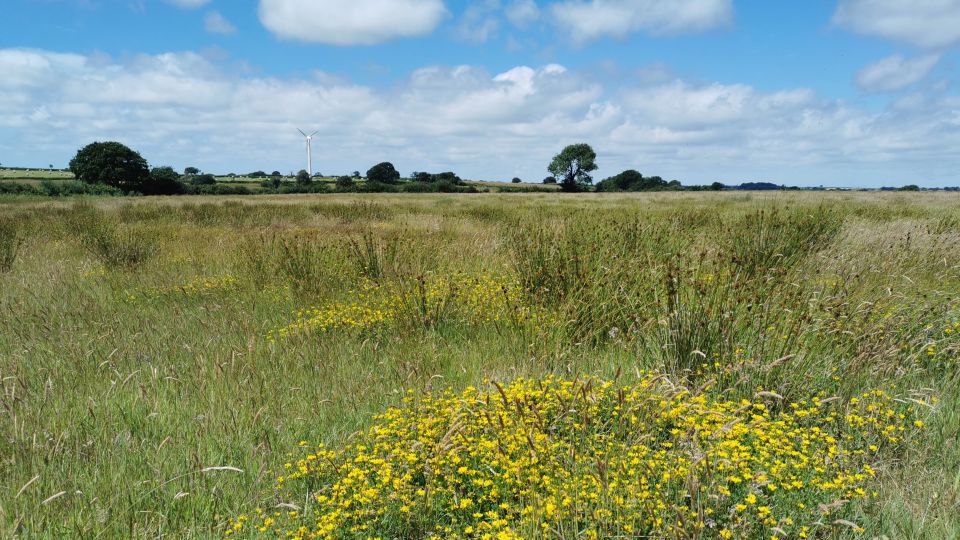
Sitting within a wider farm in Devon, this twenty-five acre site is currently being transformed from former arable farmland into a vibrant mosaic of grassland and scrub habitats.
Having gone officially live in 2023, Puddington Habitat Bank was one of the first sites established in our now nationwide network. This means that, since the very start of its creation, we have carried out seven years of nature recovery and are now seeing some incredible results.
We initially chose this land because of its low quality – after decades of intensive farming, the site was left ecologically poor and nature depleted. Through the sow and harvest of a spring barley crop, we have dramatically reduced the soil’s phosphorus levels, leading to a drastic improvement in the soil’s health. This, in turn, has facilitated the growth of native plant species as well as helping to prevent nutrient pollution in local watercourses.
There are now a wide range of wildflowers growing at the site – such as yellow-rattle, red clover, and black knapweed – and we created habitats for vital species such as the nationally declining yellow hammer and brown hairstreak butterfly, as well as barn owl and wintering snipe.
Puddington Habitat Bank was also the first of our sites to have a parcel of land meet target condition. In 2025, a patch of mixed scrub met the criteria for a high value habitat with time to spare – and we’re now seeing the growth of willow, dog-rose, blackthorn, and English oak as a result.
Our restoration of Puddington Habitat Bank stretches beyond the site itself. By creating a mosaic of species-rich neutral grassland and native scrub on the site, as well as introducing new species from hay cuttings taken from a local site, we have provided an invaluable habitat resource within the wider Culm landscape.
The quality of our results at Puddington Habitat Bank did not happen by chance. It is indicative of the care and attention that each member of our team puts into every step of our habitat creation process – from design all the way through to long-term management.
It was an honour to collect this best practice award on behalf of Environment Bank. As with all our Habitat Banks, there are many people who contribute to create a vision and then realise it on the ground and it is great to have all that hard work recognised at such a prestigious event.”
Octavia Midgley
Ecology Director
Environment Bank
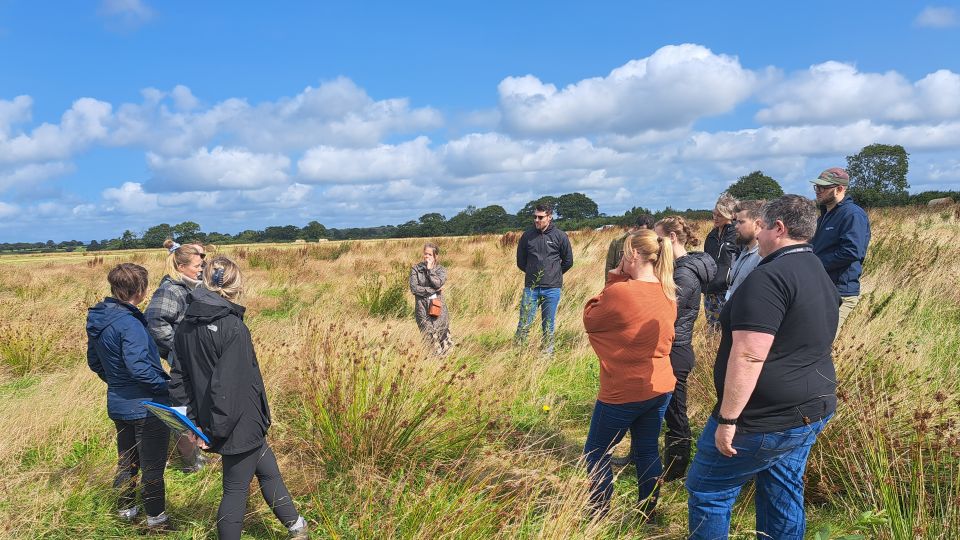
How our work goes beyond nature recovery
At Puddington Habitat Bank, our long-term habitat creation and management was designed to not only support nature, but also to deliver tangible benefits for our Biodiversity Net Gain (BNG) landowner partner.
From the outset, we committed to not only providing income diversification for our landowner partner, but to also support their business through sustainable agricultural practices.
This is why we developed a Habitat Management Plan (HMP) tailored to our landowner’s needs. By grazing their herd of Devon Ruby Red cattle on the land, we’re not only providing benefits for nature through conservation grazing – we’re also supporting the landowner’s farming business.
High-integrity nature recovery goes beyond BNG. It delivers tangible benefits to nature, local communities, and local farmers. This award recognises our team’s, and our landowner’s, hard work at this site and all the amazing results we have seen so far – at only the first stage of our nature recovery journey.
Seeing frog spawn and toad spawn up there was so exciting. Hearing grasshoppers and crickets for the first time, butterflies that were definitely not there – butterflies that are really rare in our area, like the marbled white.”
Bella Lowes, our landowner partner at Puddington Habitat Bank
