UK Government's BNG consultation response

This week, the UK Government published long-awaited responses to two key consultations on Biodiversity Net Gain (BNG) policy that ran last year. This included a consultation on small, medium, and brownfield sites as well as a consultation on the upcoming BNG for Nationally Significant Infrastructure Projects (NSIPs).
The responses have been broadly positive, offering much-needed clarity on the future of what has been a transformative environmental policy in England since its introduction in 2024.
We await further guidance from the Government this summer, including timelines for when changes will come into effect, but we’re pleased to see a number of fundamental questions answered.
The Government remains committed to BNG and recognises the importance of BNG in delivering nature-positive homes and infrastructure that this country needs.
Defra
What are the main outcomes of the BNG consultation?
The small, medium, and brownfield consultation response confirmed the following:
- An area-based exemption for small site developments up to 0.2 hectares will come into effect.
- An exemption for custom/self-build projects will be scrapped; these projects will now rely on the same 0.2ha exemption.
- A proposed blanket exemption for all minor development, and the introduction of a ‘medium’ category for development, have both been rejected.
- The proposed changes to alter the scope of the small sites metric have been rejected.
- New exemptions have been introduced for the following development types: habitat creation schemes designed to conserve or enhance biodiversity; improvements to outdoor projects like parks, gardens, and sports fields; temporary consents five years or less.
- For minor development, on-site and off-site BNG delivery will be on equal footing at the ‘compensation’ stage of the mitigation hierarchy – once habtiat impacts have been firstly avoided and secondly reduced as much as possible.
- The spatial risk multiplier will now use England’s 48 Local Nature Recovery Strategy (LNRS) areas to judge locality instead of local planning authority (LPA) areas and National Character Areas (NCAs).
- A new consultation is also being launched to investigate targeted exemptions for brownfield sites, with the aim of prioritising brownfield sites for new residential development projects.

The NSIP consultation response confirmed the following:
- BNG for NSIPs will be launched on 2nd November 2026 – any plans submitted from this date onwards will be subject to mandatory BNG.
- Defra are applying a consistent approach for BNG for NSIPs across all sectors.
- The Government will be providing support to LPAs to prepare them for the launch and will promote best practice guidance in NSIPs securing gains as early as possible in the planning process.
- On-site and off-site delivery will be equal options at the ‘compensation’ stage of the mitigation hierarchy.
- NSIPs can allocate off-site BNG from any LPA, NCA or Marine Plan Area that the project boundary is located within, and the same will apply to LNRS once the switch is made.
- NSIP promoters will be able to use any relevant planning authority to act as their discharging authority which will address any risk of disagreements and delays wherever multiple authorities are involved.
- Unimpacted habitats within Order Limits will not have to be included in the BNG baseline and the 10% BNG requirement will only apply to a smaller area called the BNG boundary.
The Government remains committed to a thriving off-site market for nature. This is essential to the success not only of BNG policy but to nature recovery objectives more broadly. The market continues to grow and mature, with a wide range of Biodiversity Units available nationally.
Defra
What do these outcomes mean for nature and development?
We are broadly supportive of the consultation responses. BNG compliance should always be a smooth process, keeping the needs of developers firmly in focus – without losing sight of what the policy is designed to achieve for nature.
The Government seeks to support residential development in England. While changes that will slightly reduce the scope of BNG, such as the 0.2ha exemption, are not the outcome we hoped for from an ecological perspective – these changes are designed to make it easier for smaller development projects to move forward.
The other exemptions will remove unnecessary complexity when looking at developments with minimal or broadly positive environmental impact. The habitat creation scheme exemption is particularly welcome as it will remove the need for Habitat Banks to meet BNG requirements.
But, we reiterate our support for the BNG Federation’s statement published last year – such an important policy cannot be diluted any further, and we hope to see that taken into account in the new brownfield site consultation.
Through BNG policy, thousands of acres of land have already been secured for nature recovery which – alongside creating jobs, boosting the rural economy, supporting sustainable agriculture, and enhancing green spaces for local communities – has generated thousands of Biodiversity Units for the off-site BNG market.
The availability of these Biodiversity Units has supported development projects across the country – from residential to commercial to infrastructure – and the speed and scale of growth has been unprecedented.
The clarity now provided – particularly the confirmed implementation date for NSIPs – is welcome news for the BNG market.
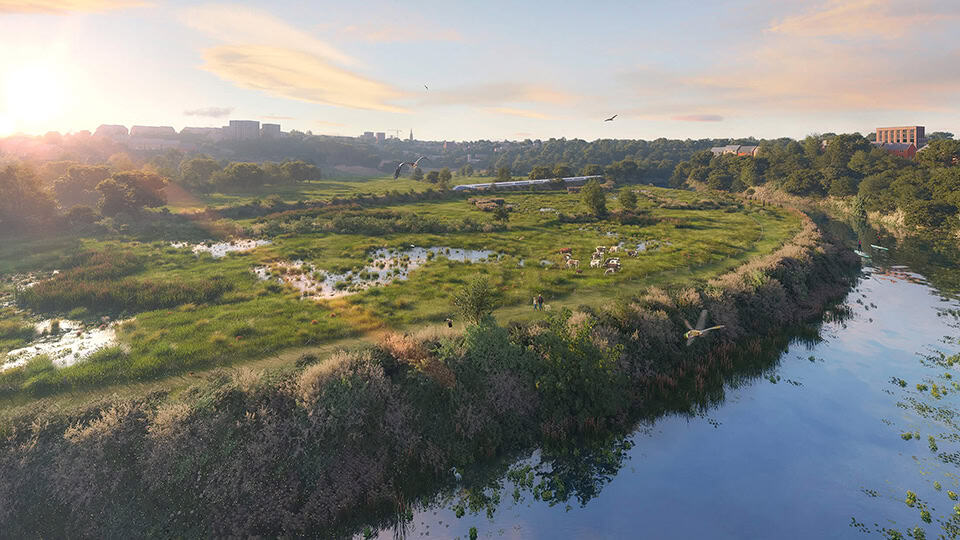
How will these changes impact the off-site BNG market?
While this will impact a small portion of the current market, BNG is agile and well equipped to adapt. The small reduction in off-site demand we expect through the 0.2ha exemption will be eclipsed by the introduction of BNG for NSIPs.
Any scaling back of BNG will have a detrimental effect on the market, but we’re confident that it will be absorbed as the market continues its rapid expansion and further evolution.
The changes to the way off-site and on-site BNG are treated in the mitigation hierarchy for both minor development and NSIPs means that it will be easier than ever for developers to go off-site, which is great news.
Also, as mentioned above, habitat creation projects like BNG sites will no longer be subject to BNG delivery themselves so it’ll be far easier to develop these at pace. That’s more urgent now than ever before with BNG for NSIPs coming into effect and the demand for off-site BNG set to increase significantly.
With this in mind, Environment Bank is already exploring the creation of bespoke Habitat Banks for clients with a high off-site Biodiversity Unit demand. These will be designed from the ground-up to supply BNG alongside added social and environmental benefits tailored to the development.
It is expected that the introduction of mandatory BNG for NSIPs will bring further confidence to the off-site market to provide the supply of Biodiversity Units needed.
Defra
What’s changed regarding the upcoming BNG for NSIPs?
While we and our partners in the BNG Federation are disappointed by the delay in introducing BNG for NSIPs to November 2026, we are grateful that a clear go-live date is in place. The Government is expected to publish biodiversity gain statements for all NSIP types in May 2026.
The confirmation that a consistent approach to BNG for NSIPs is being taken across all sectors is very welcome, and we now have a clear outline of the process. This is hugely beneficial for developers and BNG providers alike as we work together in preparation.
It’s also encouraging news that the Government will also be supporting LPAs, and that the developers can allocate off-site Biodiversity Units from any LPA, NCA or Marine Plan Area within the project boundaries to smooth the consenting process.
Our message to the Government is this: we are here to offer insight and support. We have remained in conversation with the other stakeholders, we have created an effective day one strategy, and we understand all the risk and opportunities that BNG for NSIPs will bring. We’re here to support the implementation, and we’re happy to help in any way we can.

What does the future look like?
BNG coverage is expanding all the time. Providers like Environment Bank are adding new sites to the biodiversity gain sites register (BGSR) each month, spanning counties across England. Supplying Biodiversity Units local to development projects is only going to get easier as this progresses.
We already supply fractional Biodiversity Units to ensure that developers can meet their BNG requirement exactly, and increasing habitat diversity will make that even easier. Great strides are also being made in the way Habitat Banks are created and managed, making the pipeline from enquiry to completion more efficient for landowners, providers, and developers alike.
We’ve been so encouraged by the positive response to BNG overall and see a bright future as it expands to encompass other types of development. We look forward to continuing to work with Defra and the wider UK Government in managing and delivering this world-leading policy.
BNG is a demonstrably powerful force for nature restoration, and we’re intent on continuing to deliver and champion it.
Join our upcoming webinar series
Strategic Options for NSIPs
Join our sector-specific panel discussions and Q&A sessions exploring this landmark legislation and its implications for complex major developments. Hear experts from leading infrastructure companies navigate strategic delivery options and challenges and uncover the environmental, social, and economic opportunities this legislation provides.