Snettisham Habitat Bank
LPA:
King's Lynn and West Norfolk Borough Council
NCA: The Fens
NCA: The Fens


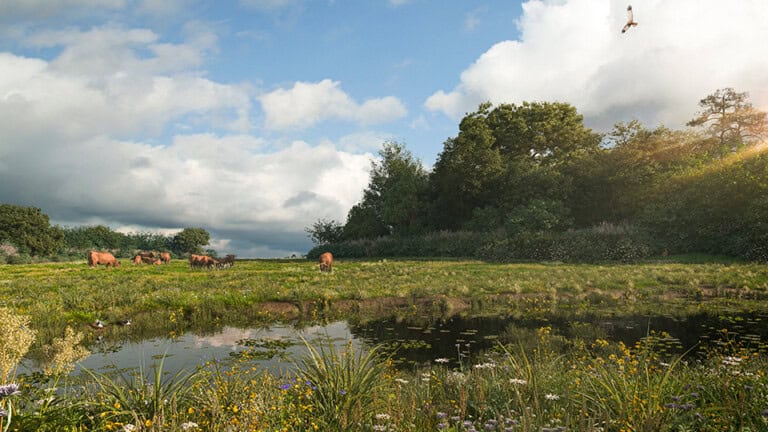
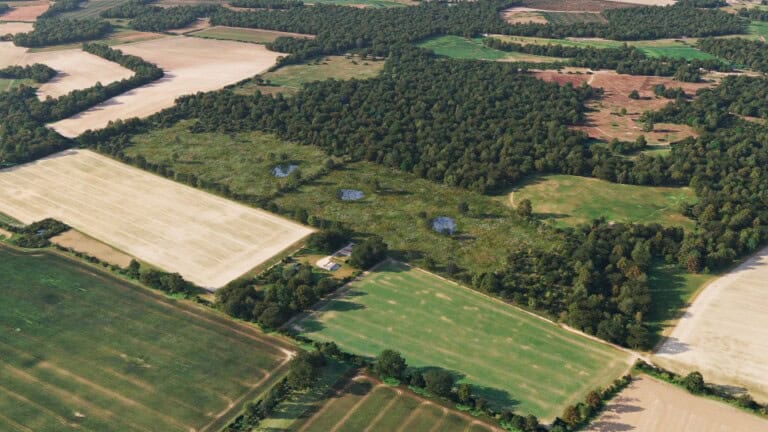
Our fifty-acre Dersingham Habitat Bank – which sits between the village of Dersingham and the Norfolk coast – has been created to restore local ecosystems and increase the resilience of the land against extreme weather.
We are working to build a nurturing environment for native wildlife and provide a home for rare and threatened species including internationally protected migratory birds.
An essential part of our Habitat Bank delivery process is the initial assessment of the land. This ensures that our team are maximising potential biodiversity uplift from the outset. We look at each site’s natural features and histories – taking into account soil type and condition, long-term management history, native wildlife, hydrology, existing vegetation, geology, and connectivity across wider landscapes.
For each of our Habitat Banks, we take a baseline using the statutory biodiversity metric – ensuring that we can accurately measure the benefits brought by our nature restoration works over our thirty-year management period.
| Neighbouring LPAs |
|---|
|
South Holland District Council
|
|
North Norfolk District Council
|
|
West Suffolk Council
|
|
Breckland Council
|
|
East Cambridgeshire District Council
|
|
Fenland District Council
|
| Neighbouring NCAs |
|---|
|
The Fens
|
|
Central North Norfolk
|
|
The Brecks
|
|
Mid Norfolk
|
|
North Norfolk Coast
|
Dersingham Habitat Bank, originally made up of arable field parcels and grassland, is being transformed into a biodiverse space that benefits existing wildlife and connects habitats within the local area.
A diverse mix of habitats are being created; this includes scrubland, reedbeds and ponds. We predict to see an abundance of key wildlife emerging, including wetland-based birds such as terns, gulls, waders, and birds of prey. With the Dersingham Bog Site of Special Scientific Interest (SSSI) – a notable wetland – on the doorstep, our qualified ecologists hope to build habitats to support the nationally rare sundew plant, as well as multiple mosses and lichens.
With unprecedented climate risks, this Habitat Bank is designed with increased land resilience in mind – helping the area to become better able to withstand floods and droughts. The wider ecosystem benefits we’re aiming to achieve include improving the health and quality of soil and water, provide better flood mitigation, and increase the land’s carbon storage.
Find out the cost and availability of Biodiversity Units from Dersingham Habitat Bank.