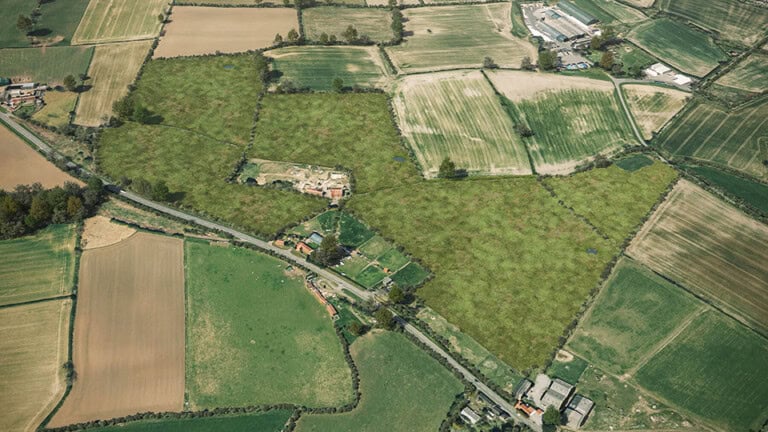
Cramlington Habitat Bank
- County
- Northumberland
- Local planning authority (LPA)
- Northumberland County Council
- National Character Area (NCA)
- South East Northumberland Coastal Plain
Biodiversity Units
Very high distinctiveness habitats
- Fens (upland and lowland)
High distinctiveness habitats
- Ponds (priority habitat)
- Wet woodland
Medium distinctiveness habitats
- Mixed scrub
- Other neutral grassland
- Other woodland; broadleaved
- Willow scrub
Habitat Bank overview
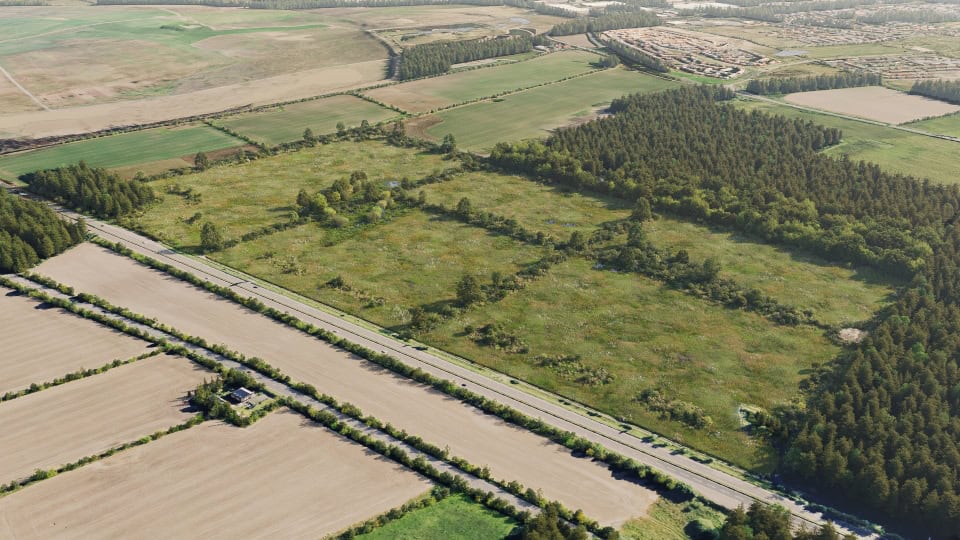
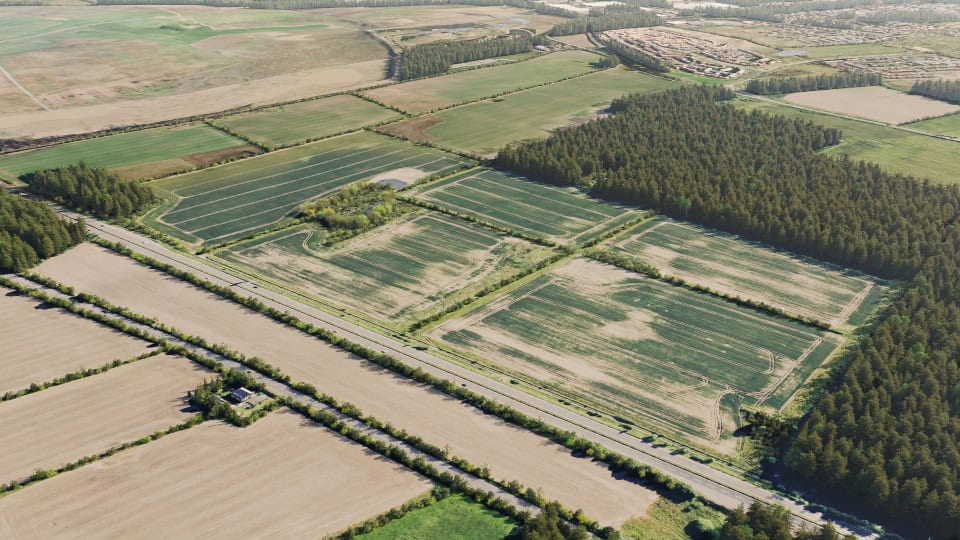
Less than ten miles from the city of Newcastle – and right beside the iconic Lady of the North, Northumberlandia – we’ve created Cramlington Habitat Bank, a site designed to provide a home for a wide range of native flora and fauna across more than a hundred acres.
BNG delivery
At every Habitat Bank, we always look at the land to determine what can be achieved from the very start. Our biodiversity experts assess the soil, wildlife, vegetation, geology, hydrology, management history, and connectivity across the local landscape.
We take a baseline for each Habitat Bank using the statutory biodiversity metric. We carefully select the best possible habitats for us to establish so we can deliver and demonstrate measurable biodiversity gains over time.
Coverage
| Neighbouring LPAs |
|---|
|
Durham County Council
|
|
North Tyneside Council
|
|
Newcastle City Council
|
|
Gateshead Metropolitan Borough Council
|
|
Cumberland Council
|
|
Northumberland National Park Authority
|
|
Westmorland and Furness Council
|
| Neighbouring NCAs |
|---|
|
Tyne Gap and Hadrian’s Wall
|
|
North Northumberland Coastal Plain
|
|
Mid Northumberland
|
|
Tyne and Wear Lowlands
|
Our vision
Sitting within three miles of ten different statutory designated sites of national and regional importance for nature, Cramlington Habitat Bank has been specifically designed and placed to help connect habitats across the landscape.
These sites include the Arcot Hall Grasslands and Ponds Site of Special Scientific Interest (SSSI) – one of the largest lowland species-rich grasslands in the North East, a site registered for its significant importance for invertebrate conservation. They also include the Brenkley Colliery and Meadows Local Wildlife Site (LWS) and the North Brenkley LWS – the last of which is a site of particular interest in terms of birds and reptiles where a number of great crested newts have been recorded.
Alongside these newts, and other amphibians like common toad, we hope to see a range of species make their home at Cramlington Habitat Bank. We’ve designed habitats to encourage mammal species (like European hedgehog, brown hare, common pipistrelle, and brown long-eared bat) and bird species (like lapwing, skylark, dunnock, linnet, snipe, oystercatcher, woodcock, and meadow pipit) to grow in abundance.
Buy BNG Units
Find out the cost and availability of Biodiversity Units from Cramlington Habitat Bank.
Nearest Habitat Banks
Hartlepool Habitat Bank
NCA: Durham Magnesian Limestone Plateau