Wymondham Habitat Bank
LPA:
South Norfolk District Council
NCA: South Norfolk and High Suffolk Claylands
NCA: South Norfolk and High Suffolk Claylands
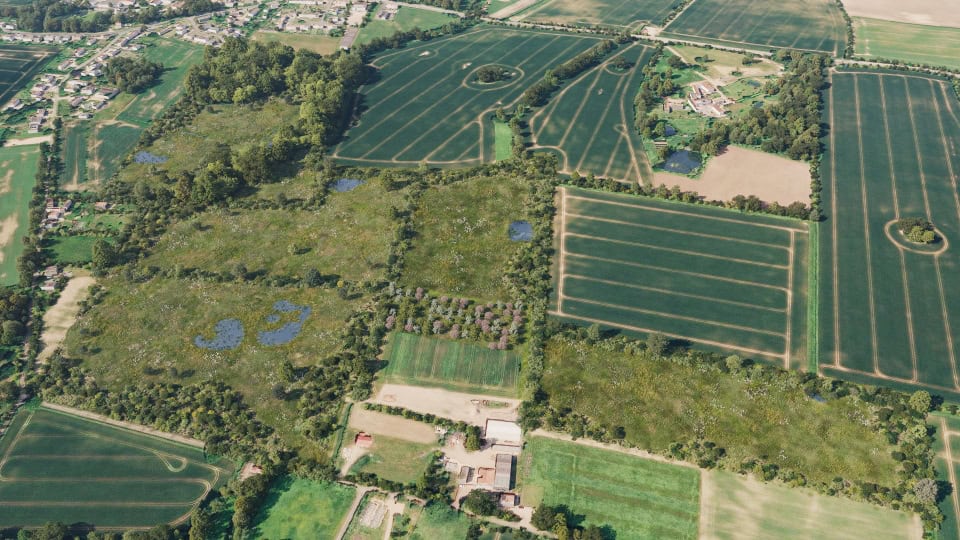
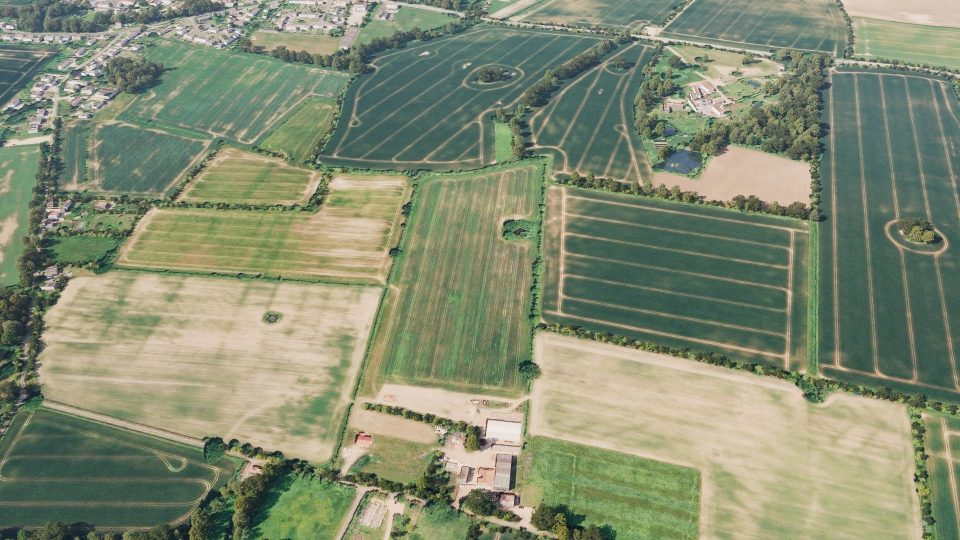
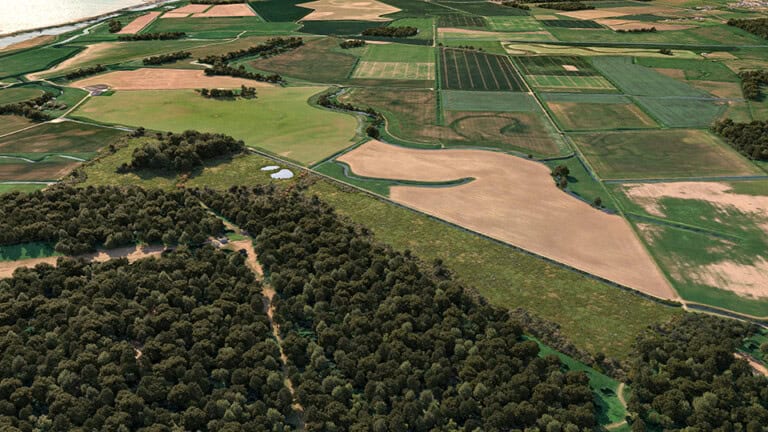
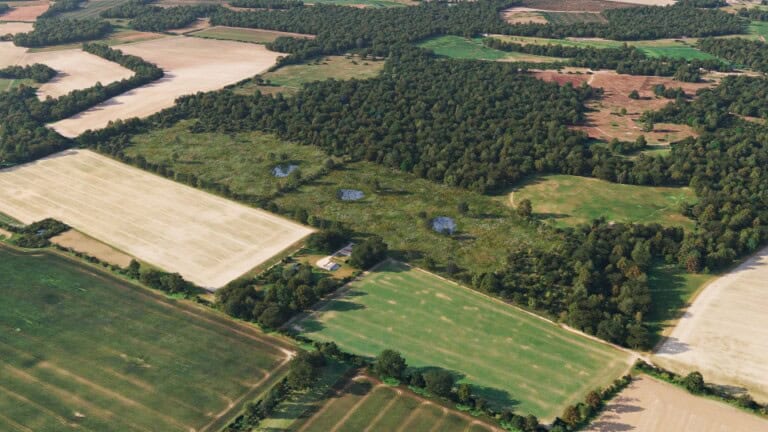
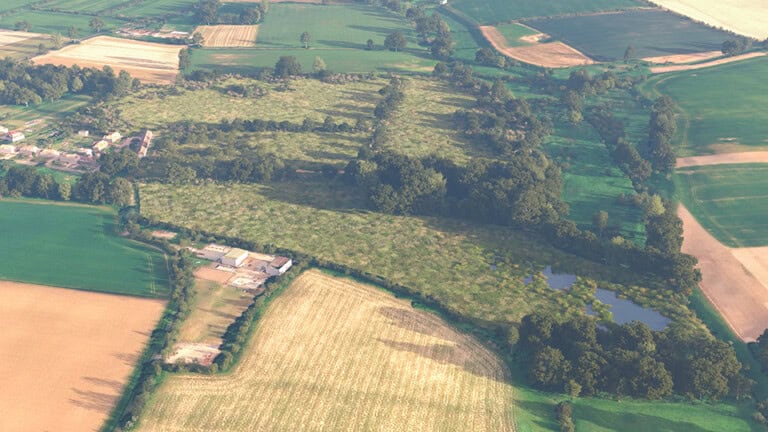
Near the village of East Tuddenham, little over ten miles from Norwich, we’ve been establishing a vast BNG Habitat Bank. Across more than seventy-five acres, our ecologists are transforming the low-biodiversity cropland into a range of new habitats to complement the local landscape.
This space will provide new habitat opportunities for several notable wildlife species, such as lapwing, great crested newt, and brown hare. With a public footpath crossing the Habitat Bank, we’re pleased that people from the local area will get to enjoy the site’s increasing biodiversity over the coming decades.
At every Habitat Bank, we always look at the land to determine what can be achieved from the very start. Our biodiversity experts assess the soil, wildlife, vegetation, geology, hydrology, management history, and connectivity across the local landscape.
We take a baseline for each Habitat Bank using the statutory biodiversity metric. We carefully select the best possible habitats for us to establish so we can deliver and demonstrate measurable biodiversity gains over time.
| Neighbouring LPAs |
|---|
|
South Norfolk District Council
|
|
North Norfolk District Council
|
|
Mid Suffolk District Council
|
|
West Suffolk Council
|
|
Broadland District Council
|
|
King’s Lynn and West Norfolk Borough Council
|
| Neighbouring NCAs |
|---|
|
Central North Norfolk
|
|
The Broads
|
|
The Brecks
|
|
North West Norfolk
|
|
South Norfolk and High Suffolk Claylands
|
Sat within a lowland meadow enhancement area, Dereham Habitat Bank has been strategically placed to help connect ecosystems across the Norfolk landscape and benefit a huge range of wildlife.
The site is close to both Hockering Wood, a Site of Special Scientific Interest (SSSI), and Coston Fen in Runhall, a Special Area of Conservation (SAC) and SSSI. It’s also near to several priority habitats, including coastal and floodplain grazing marsh (CFGM), lowland fens, and deciduous woodland.
We’re working closely with the local landowner, a Norfolk native, whose own cattle are helping to manage the meadows and grassland across Dereham Habitat Bank through sustainable, low-intensity grazing – an approach known to help benefit wildflower diversity.
Our new habitats have been chosen to help increase the abundance of wildlife, including bird species like song thrush, lapwing, and skylark; mammal species such as hedgehog, weasel, noctule, and brown long-eared bat; invertebrate species like marsh carpet and common darter; reptile species like common lizard; amphibians such as great crested newt and common toad; and plant species like ragged robin and field scabious.
Find out the cost and availability of Biodiversity Units from Dereham Habitat Bank.