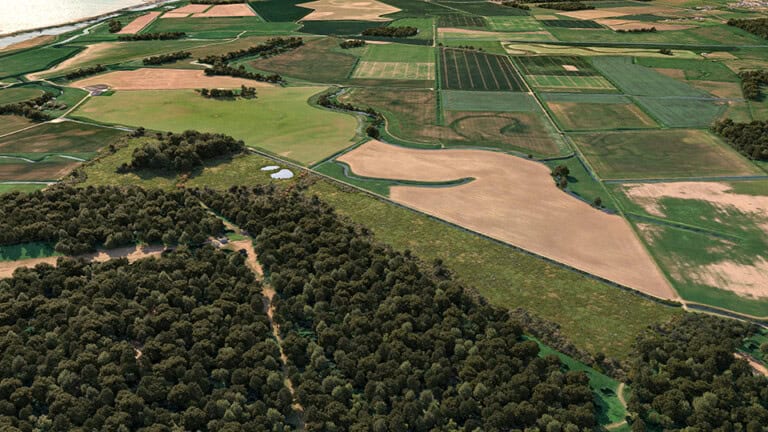
Snettisham Habitat Bank
LPA:
King's Lynn and West Norfolk Borough Council
NCA: The Fens
NCA: The Fens


Located near King’s Lynn, our Heacham Habitat Bank stretches across more than fifty acres of land adjacent to the West Norfolk coastline.
Here, we are transforming the existing arable fields into an incredible haven for native wildlife – providing essential coastal and floodplain grazing marsh habitats.
Across our network of Habitat Banks, our specialist team always evaluates the land from the outset to determine how we can best achieve our biodiversity gains. This includes assessment of our sites’ native wildlife and existing vegetation, management history, hydrology, geology, and its wider connectivity in the local area.
Using the statutory biodiversity metric, we take baselines for each of our Habitat Banks. We carefully consider and design the best habitats to establish in order to maximise our long-term biodiversity gains.
| Neighbouring LPAs |
|---|
|
South Holland District Council
|
|
North Norfolk District Council
|
|
West Suffolk Council
|
|
Breckland Council
|
|
East Cambridgeshire District Council
|
|
Fenland District Council
|
| Neighbouring NCAs |
|---|
|
Kesteven Uplands
|
|
Central Lincolnshire Vale
|
|
Lincolnshire Coast and Marshes
|
|
North West Norfolk
|
|
East Anglian Chalk
|
|
The Brecks
|
|
Bedfordshire and Cambridgeshire Claylands
|
|
Southern Lincolnshire Edge
|
We are establishing a rich and diverse mosaic of grassland, woodland, and ponds across our Heacham Habitat Bank – abundant in beautiful wildflowers. To encourage native species to grow, we’re removing any invasive species of plant – such as Horsetail located on the southern side of the site.
Heacham Habitat Bank is bordered by hedgerows, a staple of British countryside, and located within the wider Wild Ken Hill Project which aims to return land to nature through rewilding, regenerative farming, and traditional conservation.
It also sits in proximity to The Wash and North Norfolk Coast Ramsar site, Special Protection Area (SPA), Site of Special Scientific Interest (SSSI), and Special Area of Conservation (SAC). This makes the Habitat Bank ideally placed to develop connectivity with parts of the existing habitat creation and wildlife conservation project on the estate, as well as the other local nature recovery priorities.
Find out the cost and availability of Biodiversity Units from Heacham Habitat Bank.