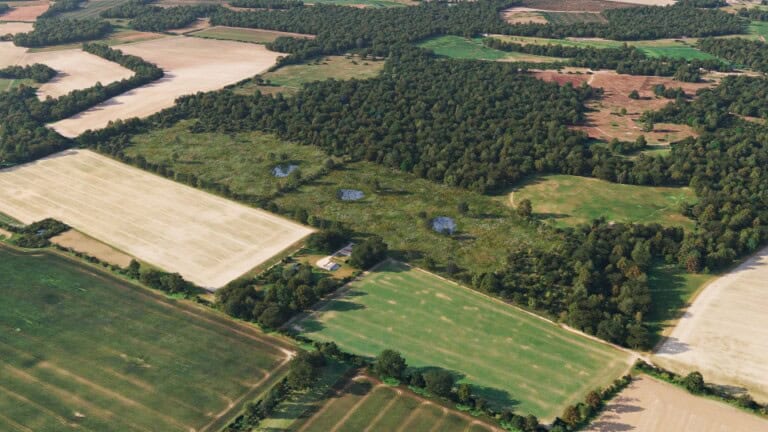
Heybridge Habitat Bank
- County
- Essex
- Local planning authority (LPA)
- Maldon District Council
- National Character Area (NCA)
- Northern Thames Basin
- Biodiversity gain sites register number
- BGS-240726001
Biodiversity Units
Very high distinctiveness habitats
- Lowland meadows
High distinctiveness habitats
- Species-rich native hedgerow with trees
Medium distinctiveness habitats
- Ditches
- Mixed scrub
- Other neutral grassland
- Other woodland; broadleaved
- Rural tree
Habitat Bank overview
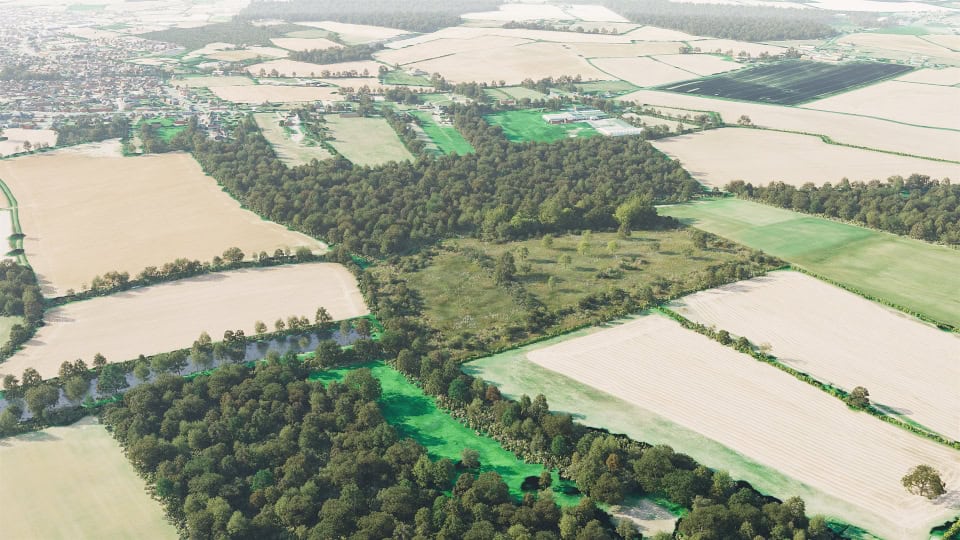
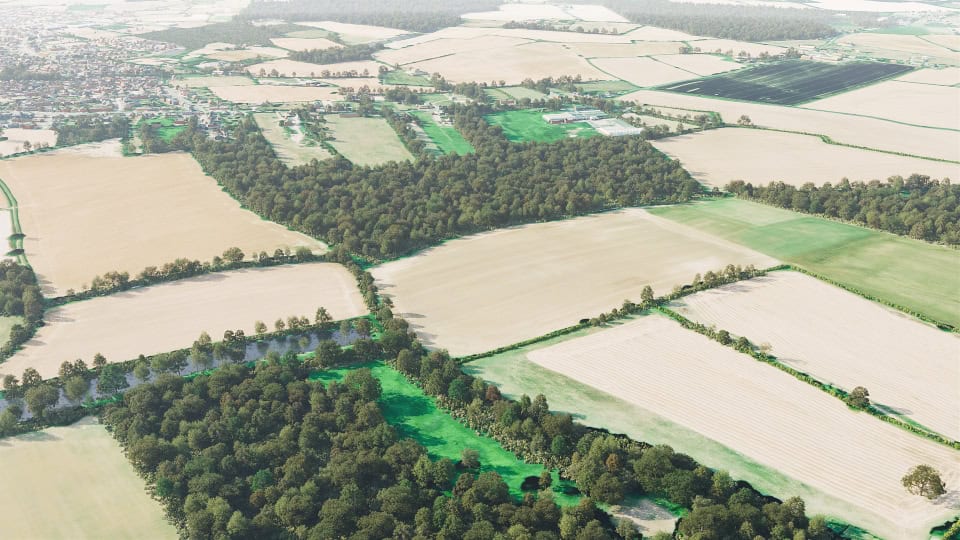
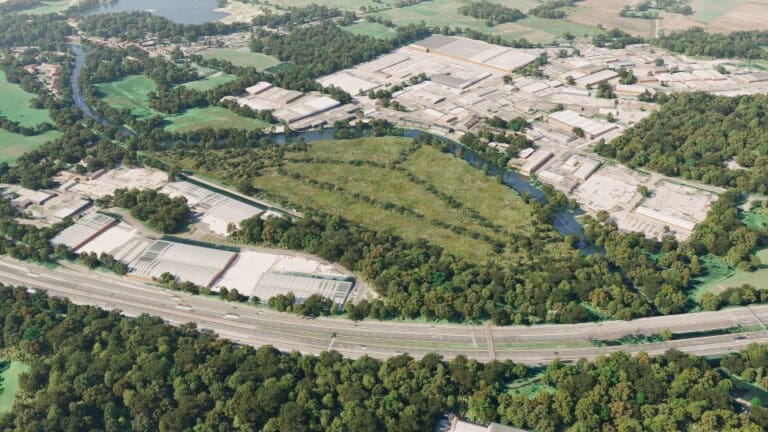
Covering over twenty acres of land in Essex – and sitting just under a mile from England’s tallest Tudor Gatehouse, Layer Marney – is our Heybridge Habitat Bank.
Our creation of species-rich hedgerows and vibrant meadows will help to transform the existing landscape into a thriving space for nature to support many crucial wildlife species in the area.
BNG delivery
At every Habitat Bank, we always look at the land to determine what can be achieved from the very start. Our biodiversity experts assess the soil, wildlife, vegetation, geology, hydrology, management history, and connectivity across the local landscape.
We take a baseline for each Habitat Bank using the statutory biodiversity metric. We carefully select the best possible habitats for us to establish so we can deliver and demonstrate measurable biodiversity gains over time.
Coverage
| Neighbouring LPAs |
|---|
|
Colchester City Council
|
|
Chelmsford City Council
|
|
Braintree District Council
|
|
Rochford District Council
|
| Neighbouring NCAs |
|---|
|
Chilterns
|
|
South Suffolk and North Essex Clayland
|
|
Inner London
|
|
Thames Valley
|
|
Suffolk Coast and Heaths
|
|
Greater Thames Estuary
|
Our vision
Heybridge Habitat Bank sits close to the Abberton Reservoir Site of Special Scientific Interest (SSSI) – which also has international importance as a Ramsar Site. This vital and diverse wetland site welcomes over 40,000 migratory birds each winter – including pochard, a red-listed species of high conservation priority.
Our ecological designs at the site include a vast range of habitats, such as woodlands, meadows, and hedgerows. These will create year-round habitats for native wildlife and provide crucial nesting and breeding sites for migratory birds each winter.
The species-rich lowland meadow at Heybridge Habitat Bank will hopefully see the growth of specialised plants that can indicate soil quality and health, such as yellow rattle and lady’s bedstraw. The presence of these plants will enable us to closely monitor the site’s ecosystem health and adapt our ecological designs accordingly.
Buy BNG Units
Find out the cost and availability of Biodiversity Units from Heybridge Habitat Bank.
Nearest Habitat Banks
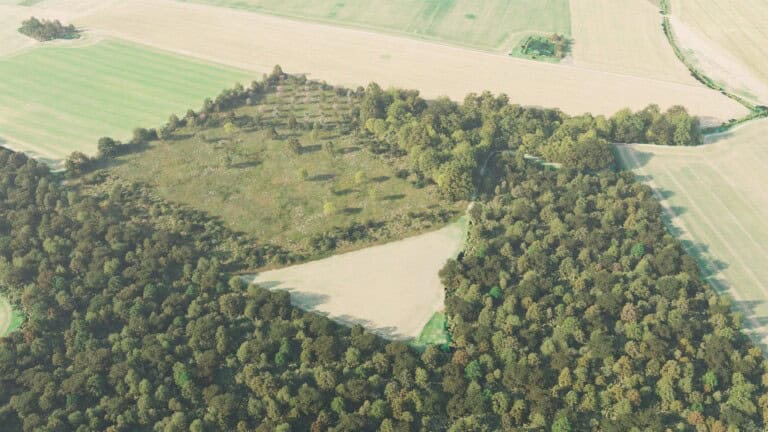
Aylesford Habitat Bank
NCA: Wealden Greensand